

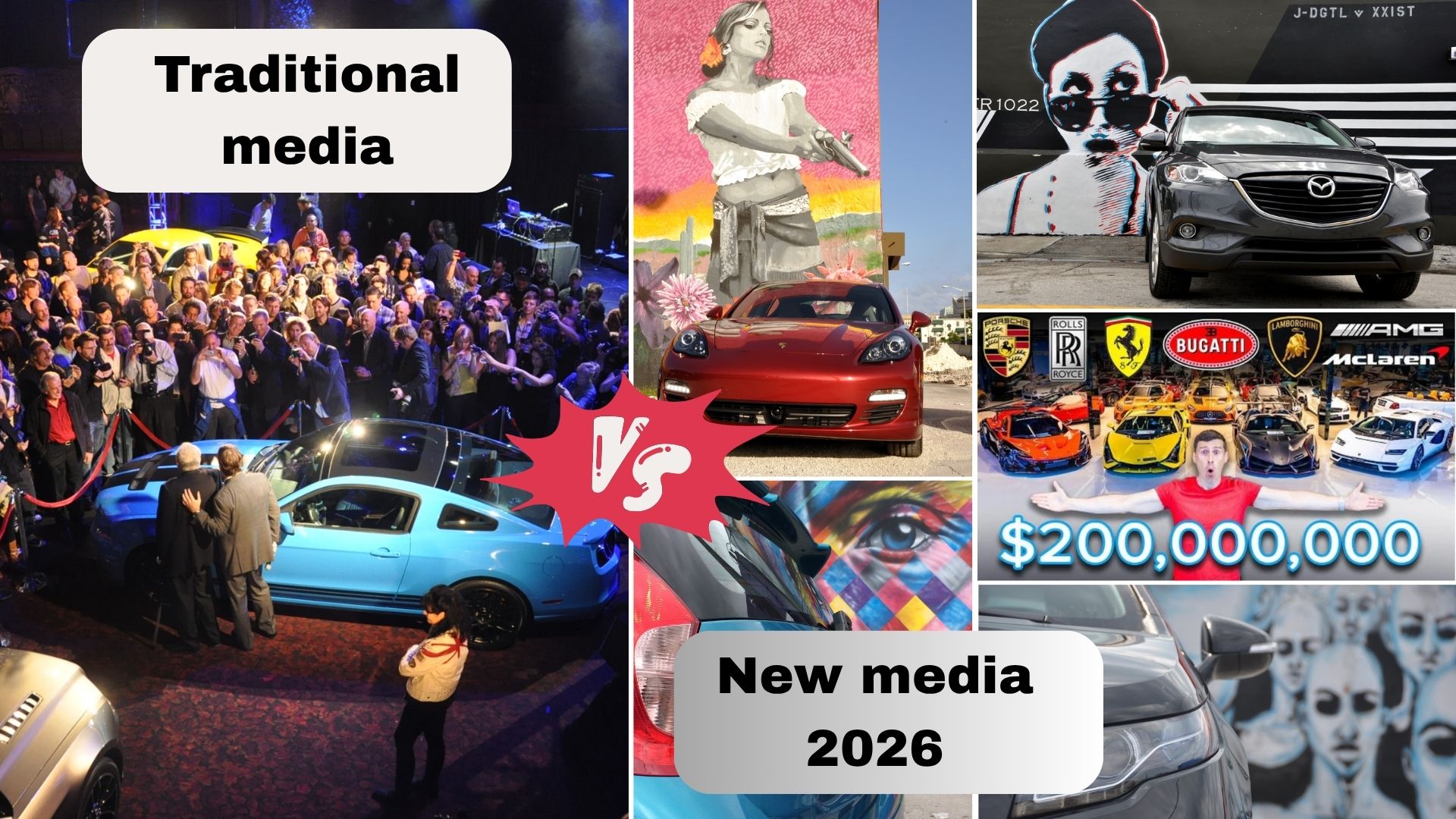
Gray-haired gatekeepers vs. algorithm-fueled ring-light warriors
Third of a series about the Automotive Media in 2026
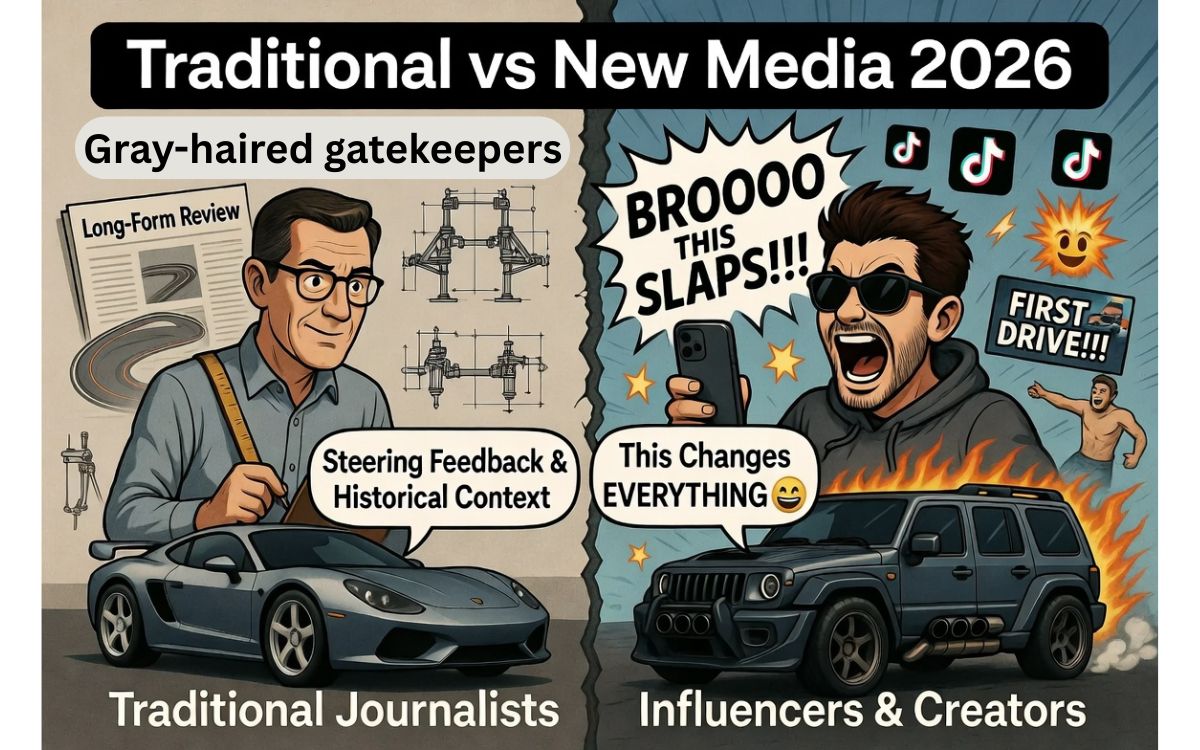
By 2026, the automotive media landscape has devolved into a glorious circus where one side still thinks a 6,000-word suspension analysis makes for riveting bedtime reading, while the other screams “THIS CHANGES EVERYTHING!!!” over aggressive RGB lighting and a theatrical launch-control pull. Somehow, we all coexist in this delicate, dysfunctional balance.
On one side: traditional automotive journalists — armed with an irrational fear of AI (technophobia, darling?), clipboards, Nürburgring lap times, religious devotion to panel gaps, and enough technical minutiae to qualify for a mechanical engineering degree.
On the other: a YouTube thumbnail featuring a fake shocked face and seven red arrows pointing at a cupholder.
Influencers film themselves yelling once more “BROOOO THIS CHANGES EVERYTHING” inside yet another matte-black SUV, conveniently forgetting to mention it costs $128,000 and was comped by the brand.
Meanwhile, business analysts float above it all with spreadsheets and agendas that have nothing to do with actual humans who buy cars.
All three tribes somehow end up at the same family-style dinner at a 5-star hotel — fully paid for by the manufacturer — each convinced they’re the noble savior of the automotive industry.
The good news? There’s something for everyone in this 24/7 content meat grinder on all digital platforms, some regular #TV and even a few printed newspapers and magazines: Yes somehow not all have folded by 2026.
Want a 5,000-word essay comparing steering feel across different tire compounds? Traditional media’s got you.
Want a shirtless guy drifting a press car into a puddle while declaring “this thing SLAPS”? Social Media has you covered too.
As the lines blur faster than a Porsche AG 911 Turbo’s 0-60 run in the hotel parking lot, traditional journalists desperately try (and fail) to master YouTube thumbnail-face expressions, while creators suddenly discover the phrase “journalistic integrity” right after their fourth sponsored recall scandal.
Here are the Top 10 Differences:
1. Speed and Format of Content
Traditional media still operates on editorial calendars, embargoes, fact-checking, production meetings, and three-week approval chains.
Creators get the car at 9 AM and drop “FIRST DRIVE!!! INSANE!!! Tesla Killer???” by 9:17 AM — followed by 17 TikToks before the traditional journalist has finished adjusting the mirrors.
2. Depth vs. Engagement
Traditional journalists insist every review must discuss steering geometry, chassis rigidity, and whether the rear dampers feel “slightly unsettled over mid-corner imperfections.”
Creators know the average viewer lasts five seconds on that, so they deliver: “BROOOO THIS THING PULLS.” Cue screaming launch reaction, drone shot, and fire emojis.
3. Monetization and Independence
Traditional automotive media (barely) clings to ethical standards and objectivity.
Influencers insist “This video is totally not biased…” while wearing a branded racing jacket at an all-expenses-paid luxury resort event hosted by the very company whose car they’re “reviewing.” Traditional media stays at the same hotel, by the way.
4. Audience Reach and Demographics
Traditional outlets appeal to people who still mutter “Back in my day, steering had feel.”
New media owns the younger crowd that discovered cars via TikTok and now ranks them by LED count, Apple CarPlay speed, launch-control clips, and “main character energy.”
5. Access and Exclusivity
Traditional media gets structured press events, technical briefings, and PowerPoints about torsional rigidity.
Creators get helicopter transfers, beach resorts, desert drifting sessions, private yacht dinners, and “content immersion experiences.”
Because nothing says “objective handling evaluation” like a sponsored sunset photoshoot.
6. Authenticity and Polish
Traditional media delivers meticulously edited, multi-person reviewed content.
Creators drop “Day 84 of my ownership update — car exploded, transmission crying, life ruined” on a shaky iPhone in a Costco parking lot.
Shockingly, the rawer and shakier it is, the more “authentic” and trustworthy it becomes.
7. Interactivity and Community
Traditional media once replied via letters to the editor… three months later.
Creators thrive on polls, livestreams, comment-section wars, and entire communities built around debating whether a lifted crossover is “technically a sports car.”
8. Measurement of Success
Traditional media tracks circulation, Nielsen ratings, and industry awards.
Creators obsess over views, likes, retention graphs, algorithm gods, thumbnail CTR, and whether Mercury is in retrograde.
9. Content Focus and Niche Specialization
Traditional media tries to cover the broad market.
Creators burrow into increasingly ridiculous niches: budget EVs under $22k, cars for dogs, cars for photographers, best car for having sex, and cars reviewed exclusively while eating fast food.
Someone, somewhere, is about to become “the heated seat guy” and hit 2 million followers.
10. Role in the Buying Journey
Traditional media used to be trusted gatekeepers guiding informed decisions.
Today, buyers binge 4 long-form reviews, 19 TikToks, 37 Shorts, 12 Reddit threads, 8 ownership updates, and 3 drag races… before buying the same gray crossover they wanted in the first place.
Research has never been more comprehensive. No one has ever been more confused.
The Hybrid Present and Future
By 2026, car brands finally figured it out: they need both.
Traditional journalists bring credibility, engineering insight, and actual analysis. Creators bring the hype, reach, and unhinged facial expressions necessary to feed the algorithm.
Together they create the perfect modern ecosystem: one explains linear brake modulation, the other screams that the ambient lighting “hits different at night.”
And somehow — against all odds — that unholy combination actually works.
(Oh, and don’t forget the analysts, silently judging everyone from their Excel spreadsheets.)
Top 10 Things Automotive Media Members Hate at Press Events — A 2026 Survival Guide for PR Professionals
Top 10 Things Media Should Never Do on an Automotive Press Trip – 2026 updated edition!